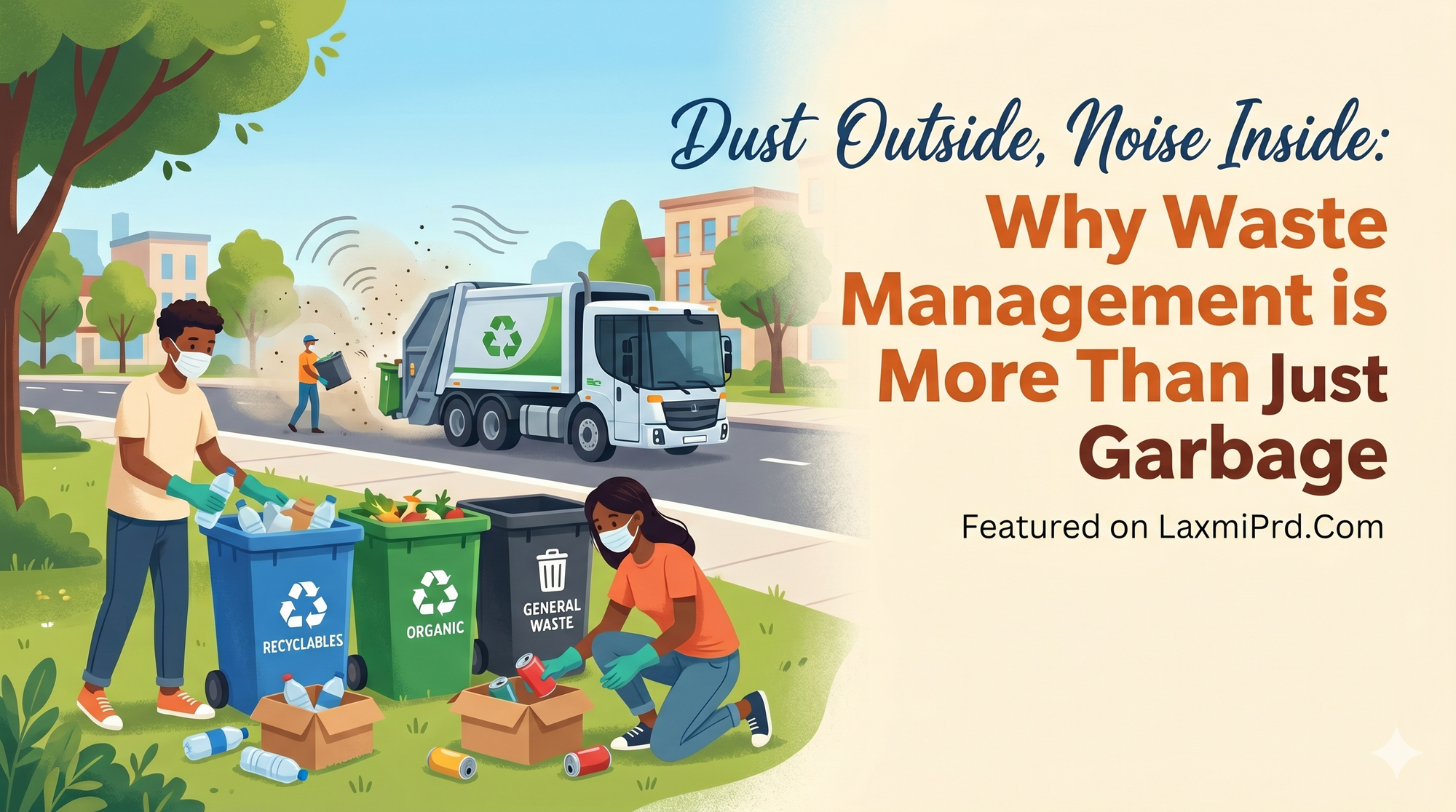
Dust Outside, Noise Inside: Why Waste Management is More Than Just Garbage
Understanding ‘Shaucha’—the hidden bridge between a clean environment and a clear mind in modern Nepal (2026)
The Reality Check: Waste in 2026 Nepal
Walk through the streets of Kathmandu, Pokhara, or even smaller towns like Dhangadhi, and one thing is obvious—waste is not just a municipal problem, it’s a cultural one. Overflowing bins, plastic wrappers in rivers, and unmanaged landfills are not isolated incidents. They reflect a deeper disconnect between our external environment and internal discipline.
In 2026, Nepal is rapidly modernising—digital apps like Nagarik, NEPSE participation rising, and infrastructure projects expanding. But ironically, our waste management systems still struggle with basics like segregation, recycling, and citizen responsibility.
This is where the ancient concept of Shaucha (शौच) becomes surprisingly relevant.
What is ‘Shaucha’? Not Just Cleanliness
In yogic philosophy, Shaucha means purity—both external and internal. It is not limited to taking a bath or cleaning your house. It extends to:
- Clean surroundings
- Clear thoughts
- Disciplined habits
- Minimal mental clutter
Think of it this way: if your room is messy, your mind feels scattered. If your environment is polluted, your thinking becomes reactive, not proactive.
This is not spirituality for monks—it is practical psychology for everyday life.
The Hidden Link: Garbage Outside = Chaos Inside
Let’s be brutally honest.
When we throw waste on the street, ignore public cleanliness, or depend entirely on the government, we are not just creating environmental damage—we are reinforcing a mindset of:
- “Someone else will fix it”
- “This is not my responsibility”
- “Short-term convenience over long-term value”
That same mindset shows up in other areas:
- Financial decisions (quick profit vs long-term investment)
- Career growth (shortcuts vs skill building)
- Governance (complaints vs participation)
If you’ve read Lessons in Local Governance, you’ll notice one key difference: systems work better where citizens take ownership.
Waste management is not just about bins—it’s about behaviour.
Why Lower-Middle Class Nepal Feels This the Most
Let’s talk reality, not theory.
For a lower-middle class Nepali family:
- Living spaces are smaller
- Waste disposal systems are inconsistent
- Public infrastructure is limited
This means poor waste management directly impacts:
- Health (disease, pollution)
- Productivity (stress, discomfort)
- Financial stability (medical costs, inefficiency)
Now imagine improving just one habit—proper waste segregation at home. It reduces smell, improves hygiene, and builds discipline. Small actions, big ripple effects.
Waste Management as a System, Not a Habit
Nepal doesn’t lack awareness—it lacks systems and consistency. A proper waste management model looks like this:
| Stage | What Happens | Nepal’s Gap |
|---|---|---|
| Segregation | Separate organic & plastic | Rarely practiced |
| Collection | Scheduled pickup | Irregular timing |
| Processing | Recycling/composting | Limited facilities |
| Citizen Role | Active participation | Passive mindset |
Countries like Australia enforce fines and accountability. Nepal? We rely mostly on goodwill.
But goodwill without discipline doesn’t scale.
Modern Solutions Meet Ancient Wisdom
The future of Nepal is not just digital—it must also be disciplined.
Technology can help:
- Smart waste tracking apps
- AI-based recycling systems
- Municipal dashboards for accountability
But technology alone cannot fix behaviour.
This is why combining modern systems with ancient values like Shaucha is powerful.
For example, initiatives discussed in From Code to Community show how civic responsibility and technology together create impact.
A Simple Framework for Every Nepali Household
You don’t need a government reform to start. You need a system at home.
Start with this 4-step model:
- Separate – Organic vs plastic waste
- Reduce – Avoid single-use plastics
- Respect – Public spaces = shared responsibility
- Reflect – Ask: “Is my environment affecting my mindset?”
It sounds simple. But consistency is where most people fail.
Global Perspective: Why This Matters Beyond Nepal
Waste management is not just a local issue—it’s global.
According to the World Bank, global waste is expected to increase by 70% by 2050 if no action is taken.
Similarly, the UN Environment Programme highlights that behavioural change is the most critical factor in solving waste crises—not just infrastructure.
Nepal is not behind because of lack of resources—it is behind because of inconsistent habits.
The Deeper Insight: Clean Mind, Better Decisions
Here’s something most people ignore:
A clean environment leads to:
- Better focus
- Reduced stress
- Improved decision-making
And better decisions lead to:
- Smarter financial choices
- Stronger communities
- Long-term growth
If you’ve explored The 10-Year Vision, you’ll see a pattern—discipline in small habits builds large outcomes.
Waste management is one of those “small habits” with massive impact.
Final Thought Before You Scroll Away
Nepal doesn’t need more awareness campaigns.
It needs consistent action at the individual level.
Because the truth is simple:
If we cannot manage our waste, we cannot manage our future.
And if we clean our surroundings but ignore our mindset, we only solve half the problem.
Shaucha teaches us both.
External cleanliness is visible. Internal clarity is powerful.
Together, they can transform Nepal.