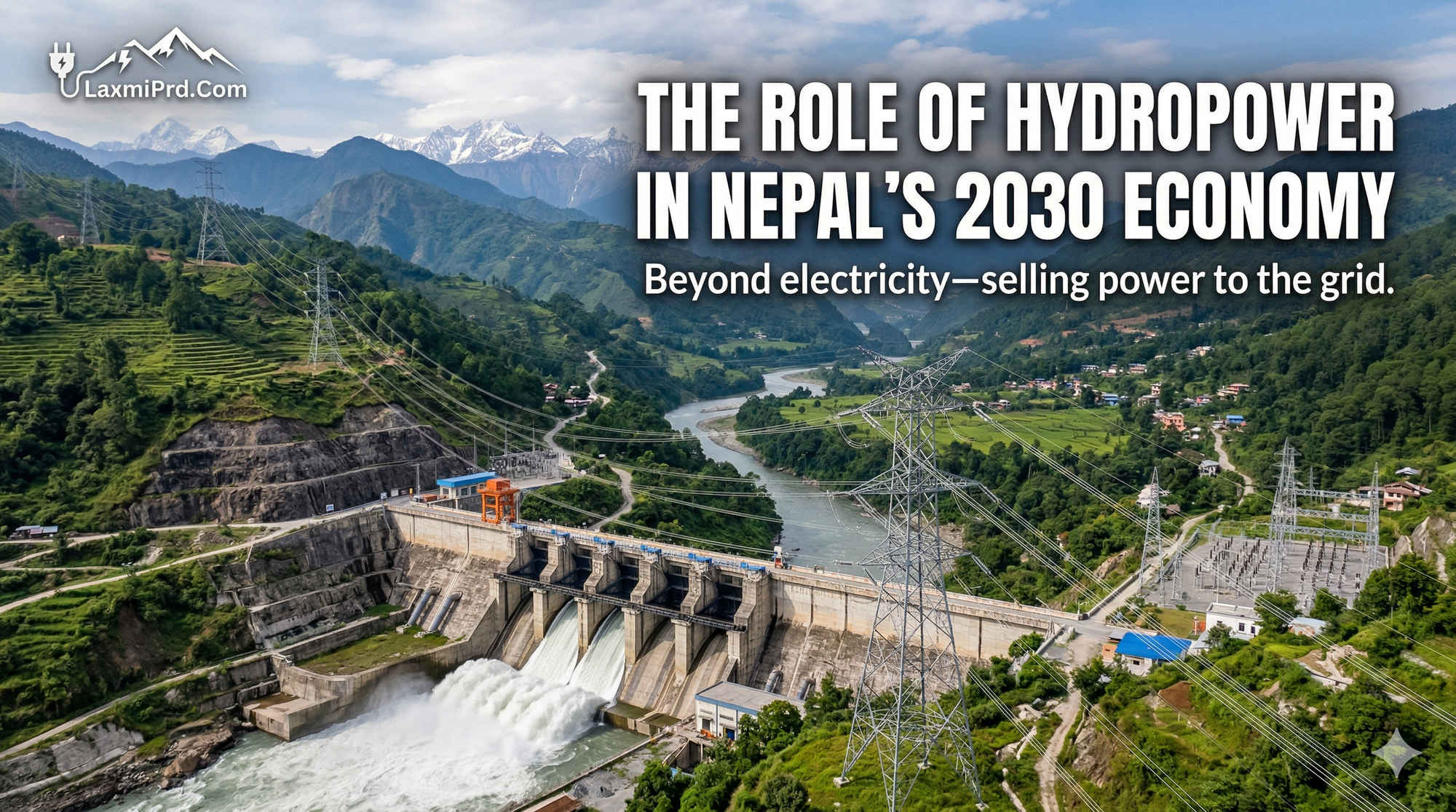
The River is Not Just Flowing—It’s Earning: Nepal’s Hydropower Story to 2030
Beyond electricity—how Nepal can turn water into a national income engine
Why Hydropower is More Than “Just Light Bulbs”
For decades, when we talked about hydropower in Nepal, we talked about load-shedding. Darkness. Short supply. Today in 2026, the conversation has shifted—and that shift matters.
Hydropower is no longer just about keeping your home lights on. It is about turning Nepal into a regional energy exporter. Think of it this way: our rivers are not just flowing water; they are flowing income, jobs, and long-term economic stability.
According to World Bank insights on Nepal’s hydropower sector, Nepal has the potential to generate over 40,000 MW economically. Yet we are still only scratching the surface.
The big question is no longer “Can we produce electricity?” but rather: “Can we sell it smartly?”
The 2030 Vision: From Deficit to Export Powerhouse
Let’s ground this in reality. Nepal has already started exporting electricity to India through cross-border transmission lines. During the monsoon season, when rivers are full, Nepal produces surplus energy.
By 2030, if current projects stay on track, Nepal could:
- Export thousands of megawatts to India and Bangladesh
- Stabilise foreign currency reserves (a constant concern for NRB)
- Reduce reliance on remittance-heavy income
In simple terms: instead of exporting labour, Nepal can export electricity.
This directly connects with a bigger economic shift discussed in long-term financial thinking—moving from survival to asset-building as a nation.
Selling Power to the Grid: How It Actually Works
This is where many people get confused. “Selling electricity” sounds simple, but it involves systems, agreements, and infrastructure.
1. Domestic Grid First
The Nepal Electricity Authority (NEA) buys power from private hydropower companies. These companies are often listed in NEPSE, meaning ordinary Nepalis can invest in them.
2. Cross-Border Transmission
Electricity is transmitted to India via high-voltage transmission lines. Agreements between Nepal and India determine how much power is traded and at what price.
3. Regional Energy Market
South Asia is slowly moving toward a regional energy market. This means Nepal could eventually sell power not just to India, but also to Bangladesh and beyond.
Learn more about cross-border electricity trade at India’s Central Electricity Authority.
So yes, your village hydropower project? It’s not small. It’s part of a much larger economic machine.
Hydropower = Jobs, Not Just Megawatts
Let’s bring this down to a human level.
For a lower-middle-class Nepali family, hydropower means:
- Construction jobs in rural areas
- Local businesses (hotels, transport, supply chains)
- Share ownership through IPOs
- Stable dividends over time
This is why hydropower IPOs are so popular. Many Nepalis see them as a safer entry into investing, which aligns with the thinking explained in IPO investment strategies in Nepal.
Instead of gambling, you’re becoming a part-owner of infrastructure. That’s a mindset shift.
Beyond Electricity: The Hidden Industries Hydropower Unlocks
This is where things get interesting. Hydropower is not just an industry—it’s a multiplier.
| Sector | Impact of Hydropower |
|---|---|
| IT & Data Centers | Cheap energy attracts global tech companies |
| Manufacturing | Lower production costs, more factories |
| Transport | Electric vehicles and rail systems become viable |
| Digital Economy | Supports fintech, blockchain, and e-governance |
A great example is explored in green data centers powered by hydropower. Imagine Nepal hosting global servers using clean energy—that’s next-level thinking.
The Risk Side: It’s Not All Smooth Flow
Let’s be honest. Hydropower is powerful, but it’s not risk-free.
- Seasonal dependency (dry season = less production)
- High initial investment costs
- Political and policy instability
- Delays in transmission infrastructure
And here’s the reality many investors ignore: just because it’s hydropower doesn’t mean it’s guaranteed profit. That’s why understanding the difference between investing and speculation matters. If you haven’t already, read this breakdown on investing vs gambling.
Hydropower should be seen as a long-term asset, not a quick win.
Policy Matters: Governance Will Decide Everything
Here’s the uncomfortable truth: Nepal’s hydropower future will not fail because of rivers—it will fail because of governance, if it fails at all.
Transparent policies, efficient licensing, and corruption-free project execution are critical. Australia’s accountability systems offer lessons that Nepal can adapt. Strong institutions mean faster projects and higher investor confidence.
Without governance reform, even the best natural resources remain underutilised.
Diaspora, Youth, and the 2030 Opportunity
This is where the younger generation and diaspora come in.
Hydropower is not just for engineers. It needs:
- Financial analysts
- Software developers (smart grids, AI optimisation)
- Policy experts
- Entrepreneurs building energy-based businesses
Instead of only sending remittance, imagine investing skills into building Nepal’s energy economy. That’s how brain drain becomes brain gain.
From Remittance Economy to Energy Economy
Nepal’s economy has long depended on remittance. While that has helped millions survive, it’s not a sustainable long-term strategy.
Hydropower offers something different:
- Recurring national income
- Export-driven growth
- Domestic industrialisation
This shift is similar to moving from saving money in a bank (which loses value over time due to inflation) to investing in productive assets. If you’ve read about the hidden risk of saving, you’ll understand why asset-based growth matters—both for individuals and countries.